The iron

One machine,
built for exactly
this work.

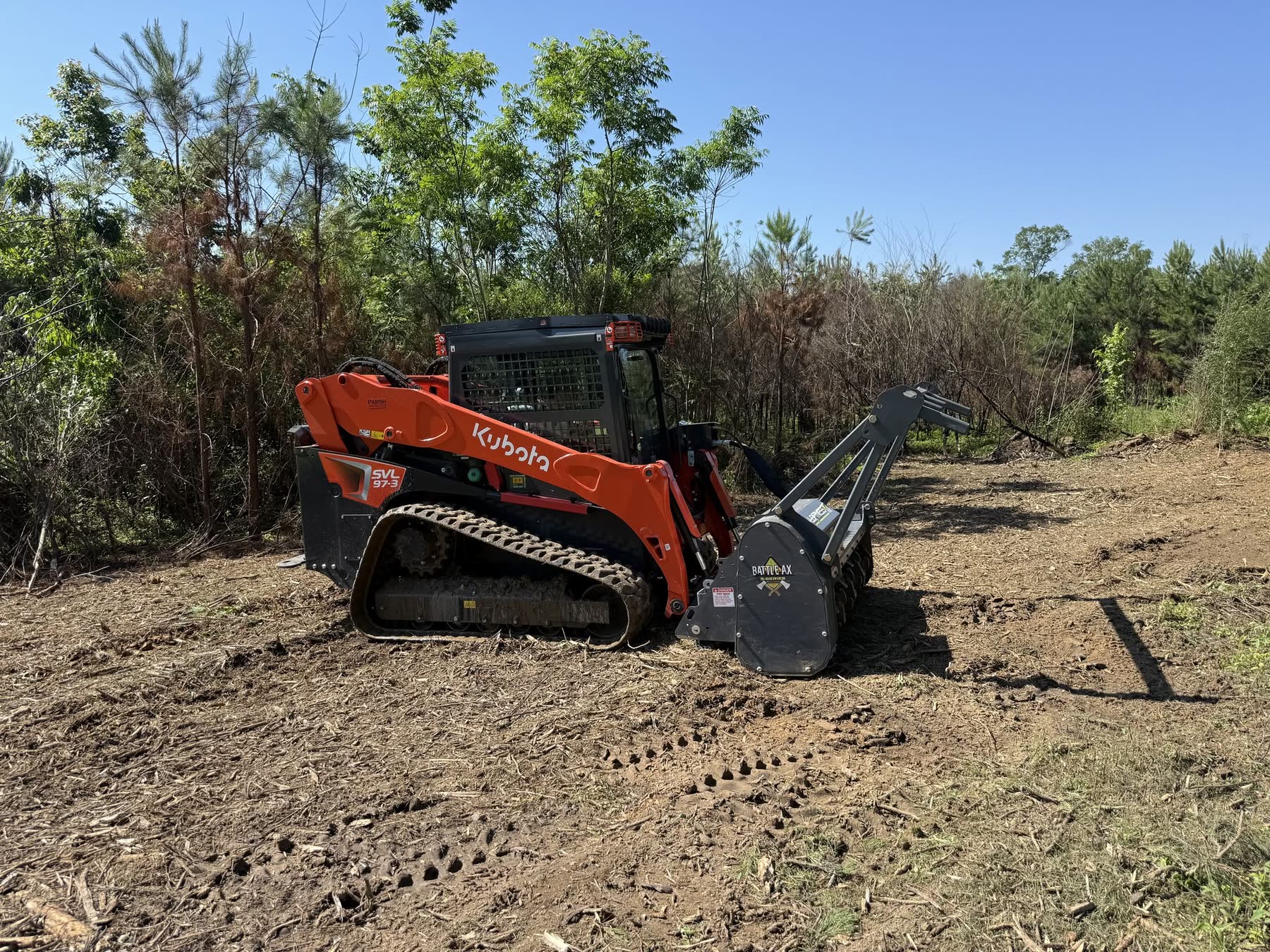
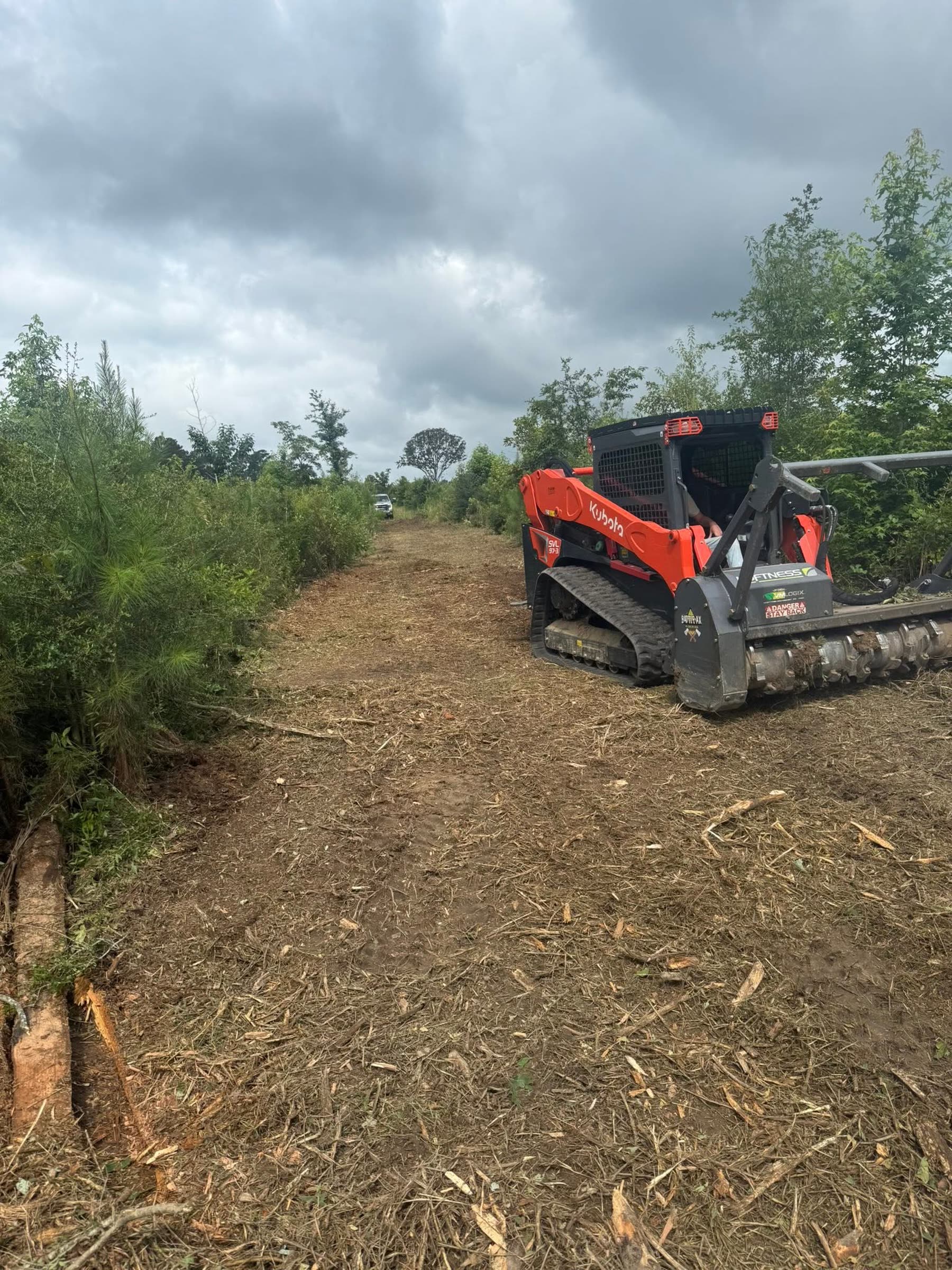
A Kubota SVL97-3 compact track loader running a Loftness Battle Ax S-Series forestry mulcher. Not a rented dozer, not a farm tractor with an attachment bolted on — a purpose-built mulching setup that shows up on your property the same way every time.

Our Kubota SVL97-3 compact track loader fitted with its Loftness Battle Ax S-Series mulching head Kubota SVL97-3 · Loftness Battle Ax

The machine

Kubota SVL97-3

The SVL97-3 sits at the top of Kubota's compact track loader line. For mulching work the two numbers that matter are horsepower and hydraulic flow — and this machine has enough of both to keep a full-size mulching drum in the cut instead of bogging down every time it meets something solid.

Engine
Kubota diesel
Gross horsepower
96.4 HP
Operating weight
11,676 lb
Rated operating capacity
3,459 lb
High-flow auxiliary
41.2 GPM
Bucket breakout force
7,650 lb
Tipping load
9,884 lb
Loader geometry
Vertical lift
Undercarriage
Rubber track
Mulching head
Loftness Battle Ax S-Series

Loader figures are Kubota's published specifications for the SVL97-3.

Spec sheet, translated

What those numbers mean
standing on your property.

Nobody hires a contractor because of a horsepower rating. Here is what each of those figures actually changes about your job.

41.2 GPM

The head stays in the cut

A mulching drum cuts clean at speed and tears when it drops below it. High flow means the head recovers almost instantly after a heavy stem, so the machine keeps walking forward. A standard-flow machine running the same head spends a large part of the day waiting to spool back up — and you are paying for that time.
96.4 HP

Thick spots do not become slow spots

Density is what actually costs you money on a mulching job. Enough engine behind the pump means a wall of privet gets cut at close to the same pace as scattered brush, instead of turning into an extra half day on the invoice.

11,676 LB on tracks

Weight spread, not concentrated

Ground damage comes from pressure, not tonnage. Carrying that weight across two wide rubber tracks spreads the load far better than four tires do, so the machine keeps working in soft bottomland and leaves your topsoil and drainage where they were.

Vertical lift

Reach where you need it

Vertical-lift geometry carries the head high and level through the whole lift path. That means cleaner work along fence lines, under low canopy and up against structures — and the ability to stack or load material when a job calls for it.

The attachment

Loftness Battle Ax
S-Series mulcher.

The loader is the power supply. The drum on the front is what turns standing timber into a mulch blanket, and it is the part most people never think to ask about.

The Battle Ax S-Series is built for the 28–63 GPM range, which puts our SVL97-3 at 41.2 GPM right in the middle of its working band — matched to the machine, not undersized and not starved.

  • Two-stage cutting chamber. Material gets processed twice on the way through, so you get finer mulch in fewer passes instead of a field of half-chewed sticks.
  • Depth-gauge rotor. The rotor carries built-in depth gauges that meter the bite — the same idea as raker teeth on a chainsaw. It is what keeps the head cutting instead of grabbing and stalling.
  • Adjustable shear bar. Two shear bars, the primary one adjustable, so particle size can be dialled to the job — coarse for a quick knock-down, finer for ground you intend to plant.
  • Cuts at or below grade. No stump field left behind, so you are not steering around craters next season.
The Loftness Battle Ax S-Series mulching head and its toothed drum on the front of our SVL97-3 Loftness Battle Ax S-Series

Why not a dozer

Three machines, three
different results.

People compare bids without comparing what actually gets left behind. This is the honest version.

Dozer

Fast and cheap per hour. Pushes brush, stumps and topsoil into a pile someone has to burn or haul, and leaves rutted, stripped ground that erodes and comes back thicker.

Hand crew with saws

Precise and selective, but slow and expensive by the acre — and you still have every cut stem lying on the ground waiting to be dealt with.

Mulching track loader

Cuts, grinds and cleans up in one pass. Selective enough to keep the timber you want, gentle enough to leave soil and drainage intact, and finished when the machine rolls off.

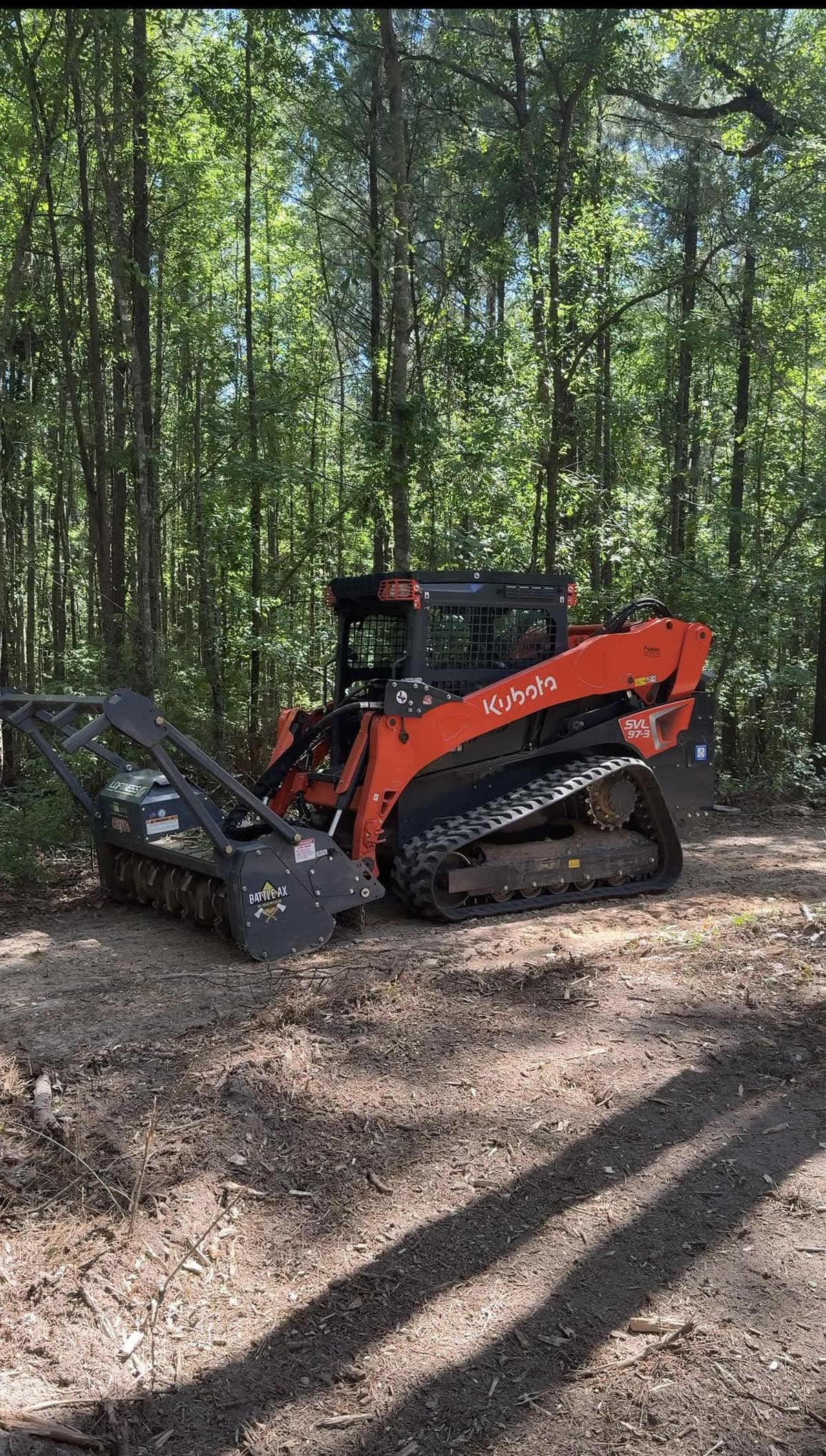
The SVL97-3 on its rubber tracks partway down a lane it has just mulched Low ground pressure undercarriage

Equipment questions

The ones worth asking
any contractor.

If a bid comes in well under everyone else, these questions usually explain why.

Get a free estimate
Why does high-flow hydraulics matter?

A mulching drum has to spin at speed to cut instead of tear, and hydraulic flow is what keeps it there. At 41.2 gpm the head recovers almost immediately after hitting a heavy stem, so the machine keeps moving forward.

A standard-flow machine running the same head spends much of the day waiting on the drum to spool back up — and that time lands on your invoice.

Will a machine this heavy rut up my property?

Weight matters less than how it is spread. Nearly six tons carried across two wide rubber tracks puts far less pressure on the ground than a lighter wheeled machine concentrating the same load on four contact patches. That is exactly why a tracked loader keeps working in soft bottomland where a skid steer would be buried to the axle.

How big a tree can the head handle?

Brush and stems up to roughly 8 inches in diameter go down comfortably. Past that it becomes a question of species, lean and what is standing around it. Send a photo and you will get a straight answer instead of a guess on the day.

Do you own the equipment or rent it?

We own it. It is maintained on our schedule, the operator has real hours on that specific machine, and your job never gets bumped because a rental yard handed the unit to somebody else.

Are you insured?

Yes. Weber Land Management Solutions LLC carries liability coverage and we will provide a certificate before work starts — just ask when you book.

Free estimates · No obligation

Put the machine
on your property.

Steve or Wade will walk the ground, look at what is actually standing there, and give you a firm number at no charge.