What we do
Five services.
One machine that does
all of them right.
Forestry mulching, land clearing, bush hogging, food plots and shooting lanes — across McComb and the surrounding South Mississippi counties. Every job quoted free, on site, by the person who will run the machine.
Start here
Woody, or just grown up?
That one question decides most of it. Woody stems mean a mulching head. Grass and weeds mean a rotary cutter and a smaller bill. We would rather point you at the cheaper service and keep you as a customer than oversell the first job.
8″
Stem capacity
1
Machine, one pass
5
Counties covered
0
Debris hauled off
Service 01
Forestry Mulching
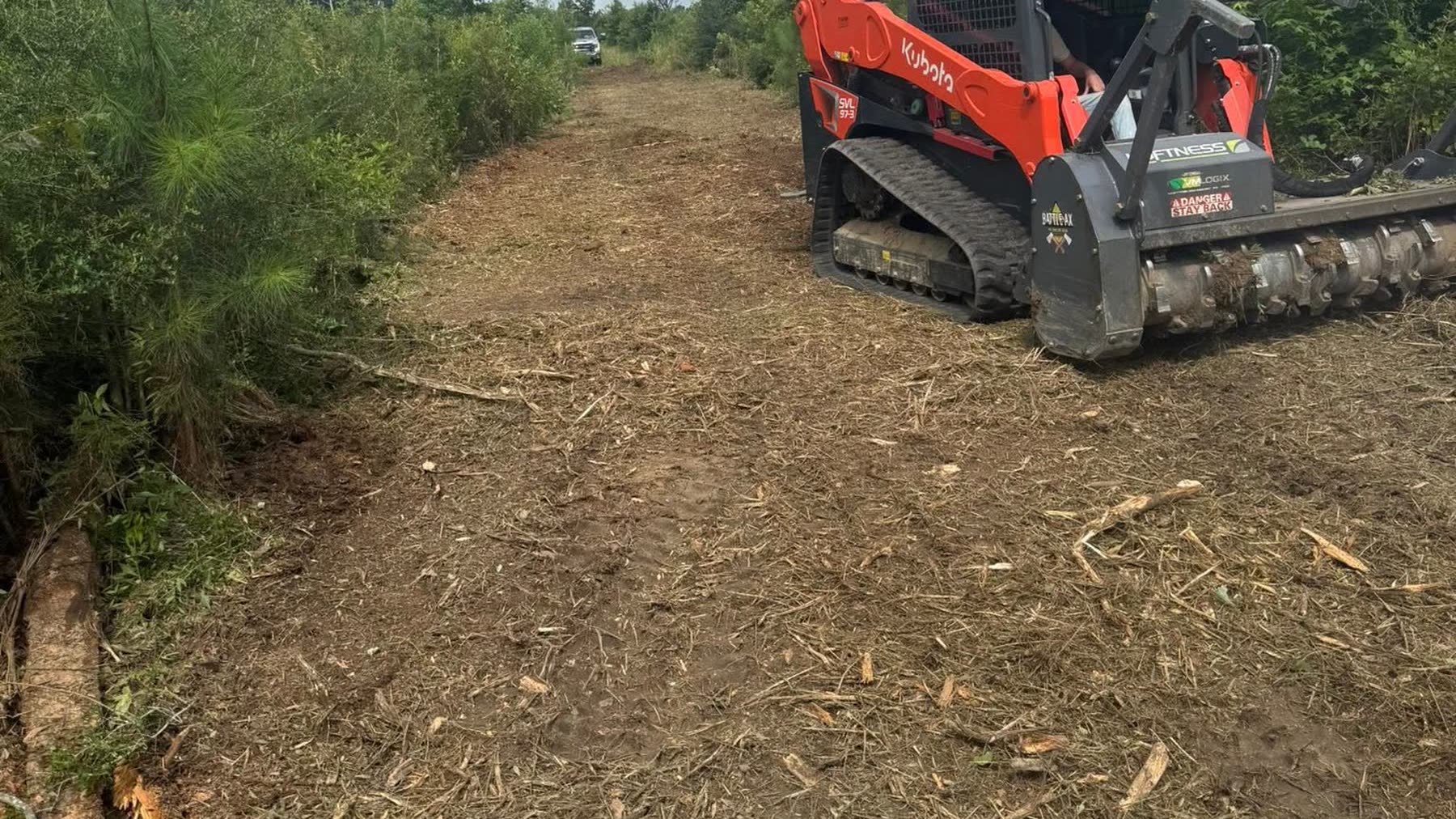
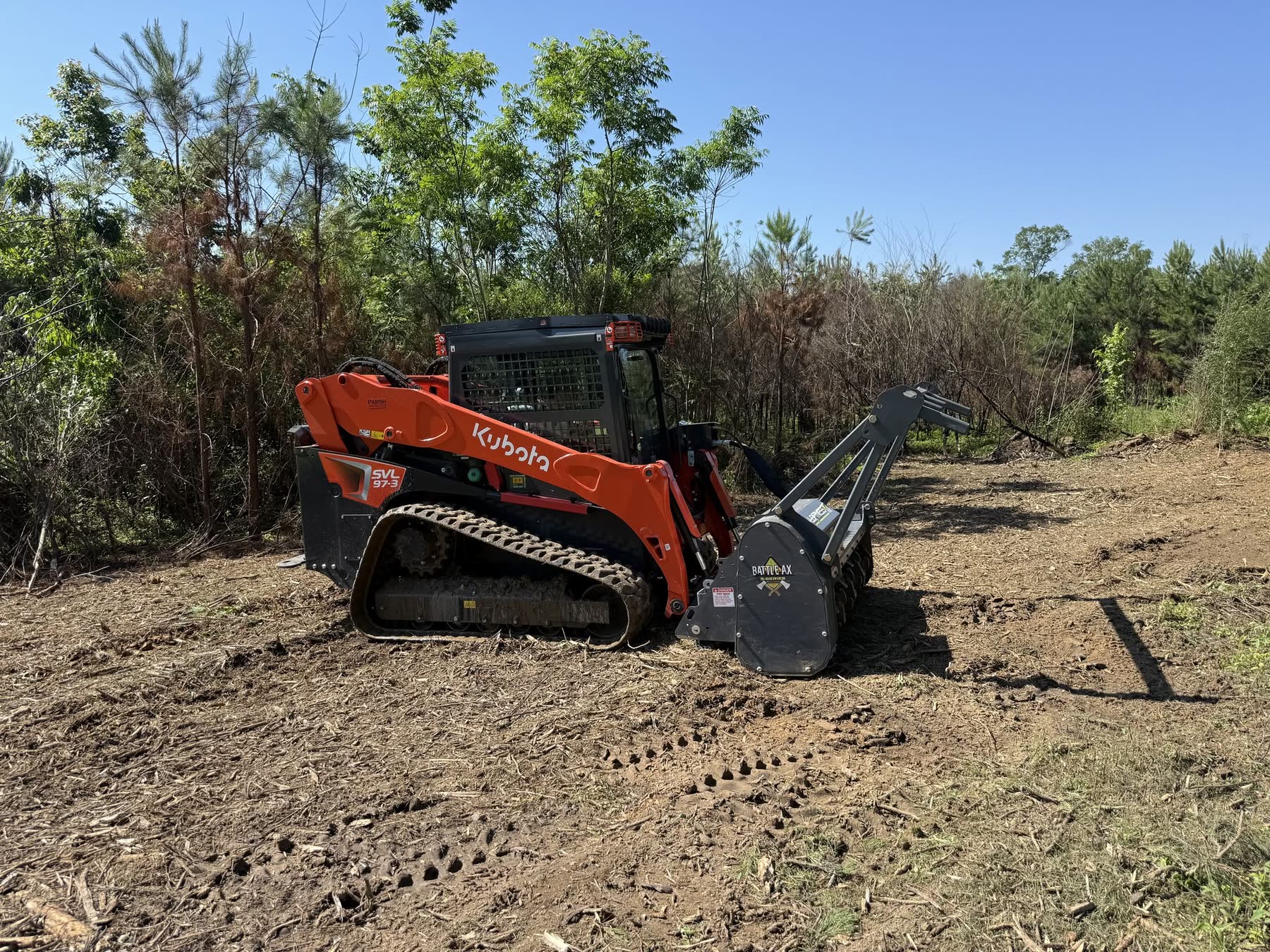
One machine grinds standing brush, saplings and small trees into a mulch layer that stays right where it falls. No pushing, no piling, no burning, no hauling.
This is the core of what we do and the reason most people call. A high-flow mulching head on a tracked loader cuts and grinds in the same motion, so the acre is finished as the machine moves across it rather than in three separate stages with three separate machines.
The result is a clean, walkable floor with a mulch blanket over it. That blanket is doing real work — it armors the bare soil through the first hard rain, shades out the seed bank so briars and privet come back slower, and breaks down into the ground instead of into a smoke column.
What that includes
- Underbrush and privet. The tangled stuff that makes a stand impossible to walk or hunt.
- Saplings and volunteer growth. Sweetgum, pine and hardwood regrowth taken down at grade.
- Stems to roughly 8″. Comfortable working range for the head. Bigger, we talk first.
- Selective cutting. Mature timber, hardwoods and travel corridors marked and left standing.
- Mulch left in place. No burn permit, no smoke, no dump trailer, no debris line on the invoice.
 Forestry Mulching
Typically called for
- Overgrown timber stands
- Property lines and boundaries
- Recreational and hunting land
- Pasture reclamation
- Trails and access roads
- Pond banks and creek edges
Service 02
Land Clearing
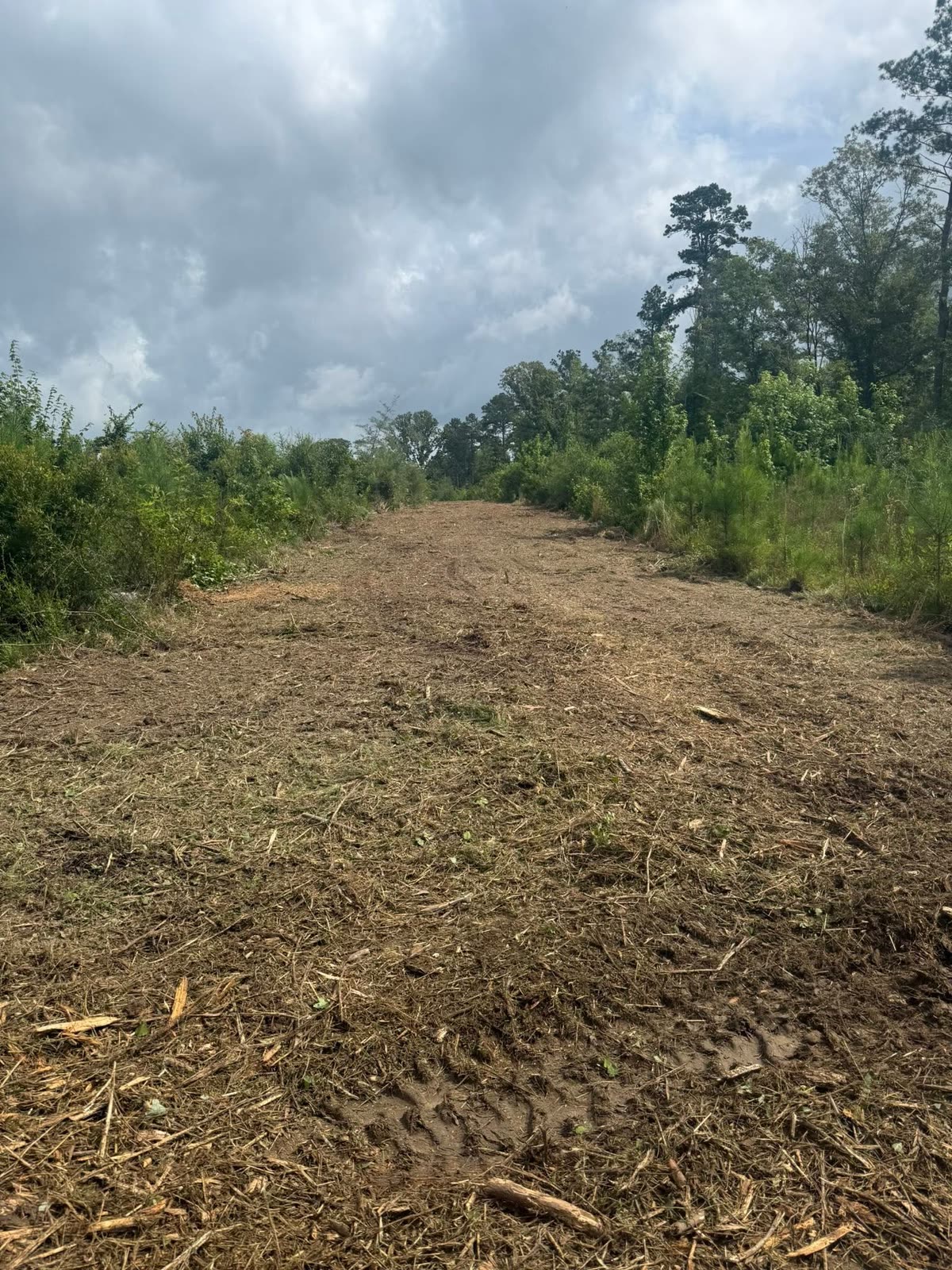
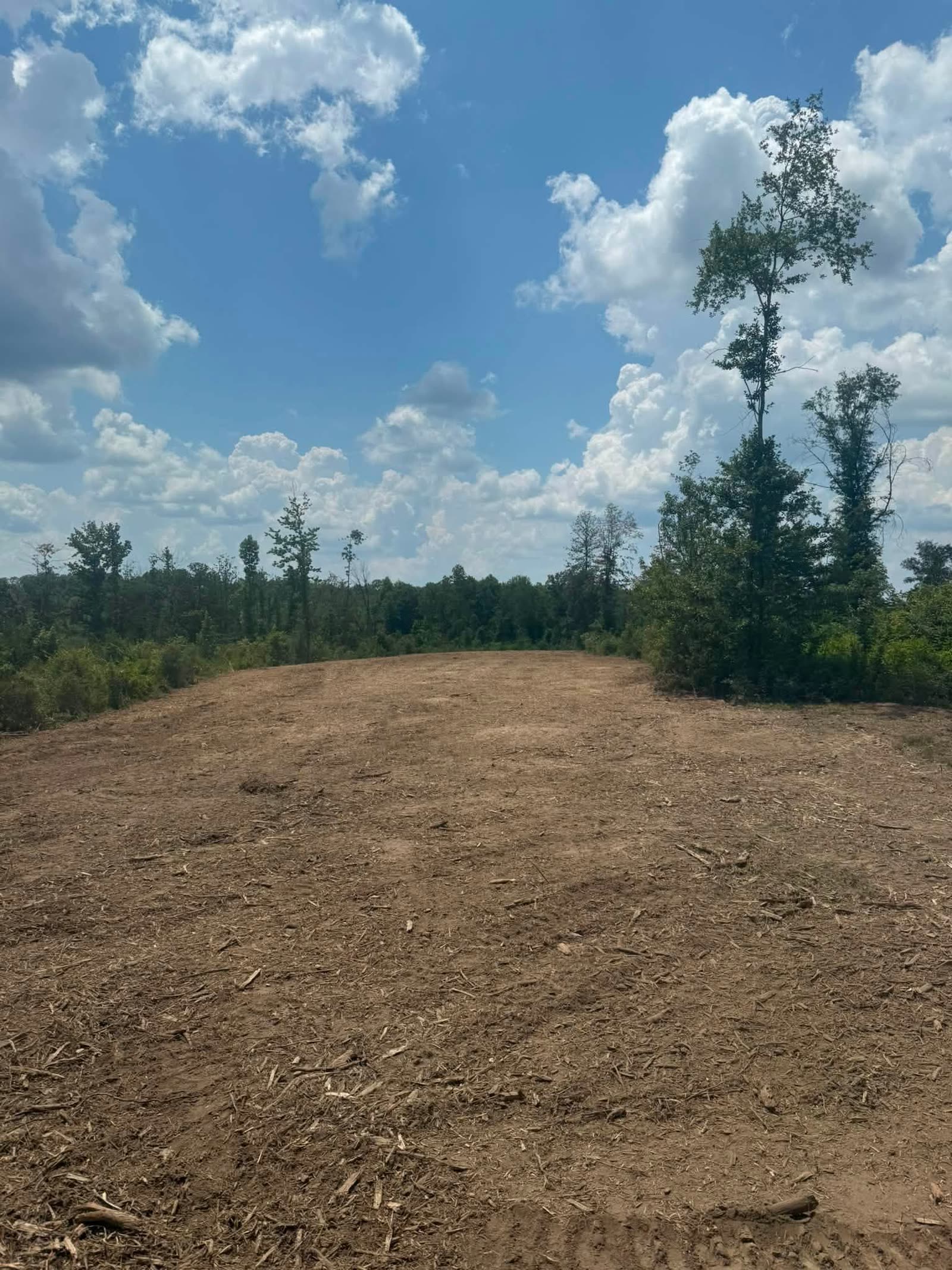
Opening up ground for something specific — a house pad, a barn, a pasture, a driveway, a fence line you can actually run wire down.
Land clearing is mulching with a destination. Instead of thinning a stand for wildlife, we are taking an area down to usable, buildable, plantable ground and leaving a defined edge where you want one.
Because the material gets ground rather than pushed, you are not left with a windrow at the property line or a stump field to work around. On most jobs that means the site is ready for the next trade sooner and for less than a push-and-burn approach.
What that includes
- Building and barn pads. Cleared to your stakes and left level enough to work from.
- Pasture reclamation. Grown-up fields taken back to grass-ready ground.
- Fence lines. Straight, clean corridors you can set posts down without fighting roots.
- Driveways and access. Cutting in the route to the back of the property.
- Right-of-way and easements. Utility runs, culverts and equipment access.
 Land Clearing
Typically called for
- New construction sites
- Barns, shops and outbuildings
- Cattle and horse pasture
- Fence and survey lines
- Driveways and logging roads
- Solar and utility easements
Service 03
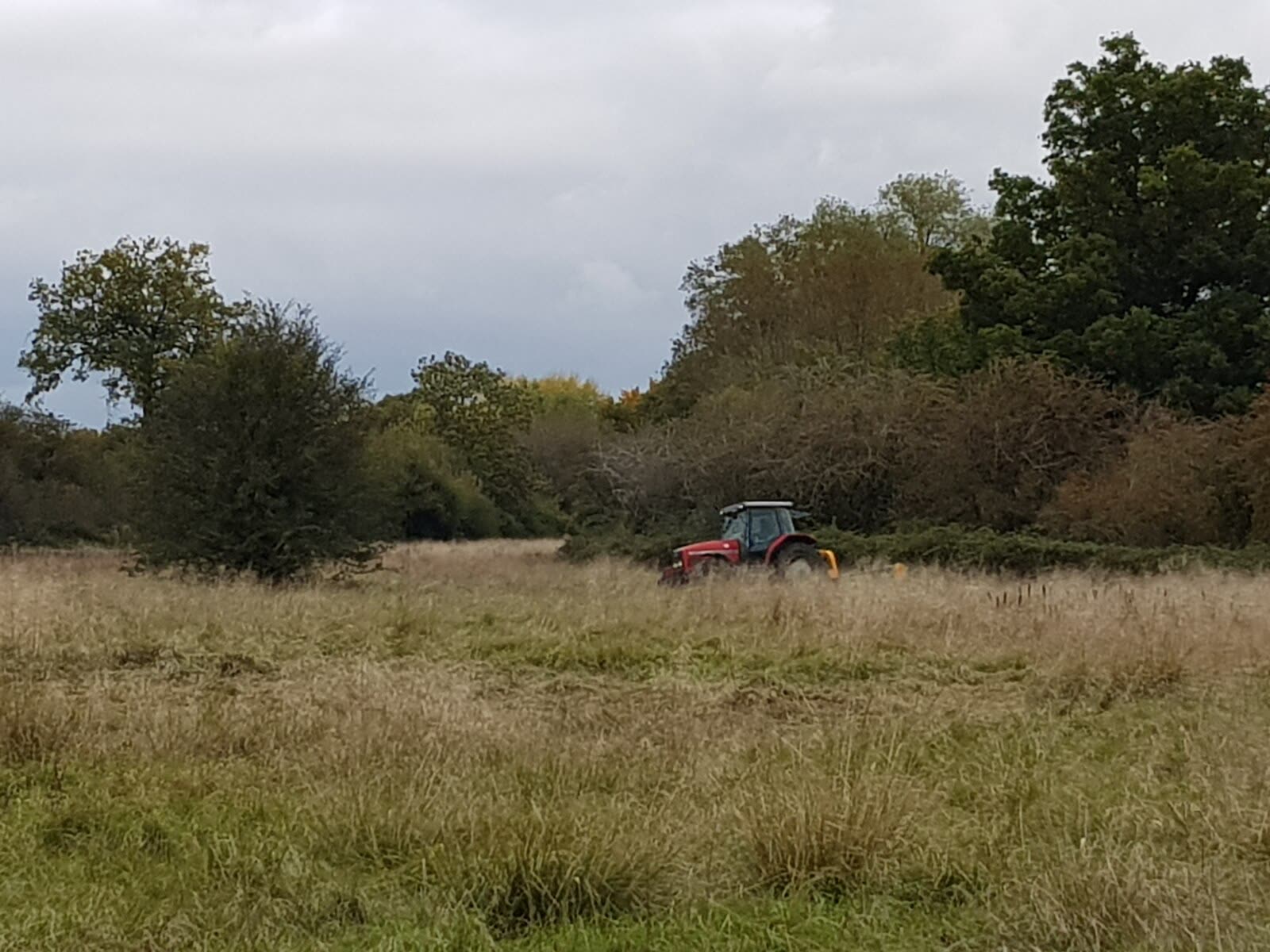
Bush Hogging
Fields, pastures, road frontage and camp yards knocked back down to something you can walk, mow or run cattle on.
Not every job needs a mulching head. When it is grass, weeds and light brush rather than woody stems, a rotary cutter does the work faster and cheaper — and we will tell you when that is the case instead of selling you the bigger machine.
Most bush hogging is maintenance work on a schedule: a couple of cuts a season keeps a field from turning back into a thicket, and keeps a five-figure clearing job from ever being necessary.
What that includes
- Fields and pastures. Cut on a schedule so growth never gets ahead of you.
- Road frontage. Ditch lines and shoulders kept presentable and visible.
- Hunting camps and food plots. Knocked down between seasons.
- Vacant lots. Kept in compliance and kept from going feral.
- Seasonal maintenance. Recurring visits so it never becomes a clearing job.
 Bush Hogging
Typically called for
- Cattle and hay pasture
- Absentee-owner acreage
- Hunting camps
- Road and ditch frontage
- Vacant residential lots
- Between-season plot upkeep
Service 04
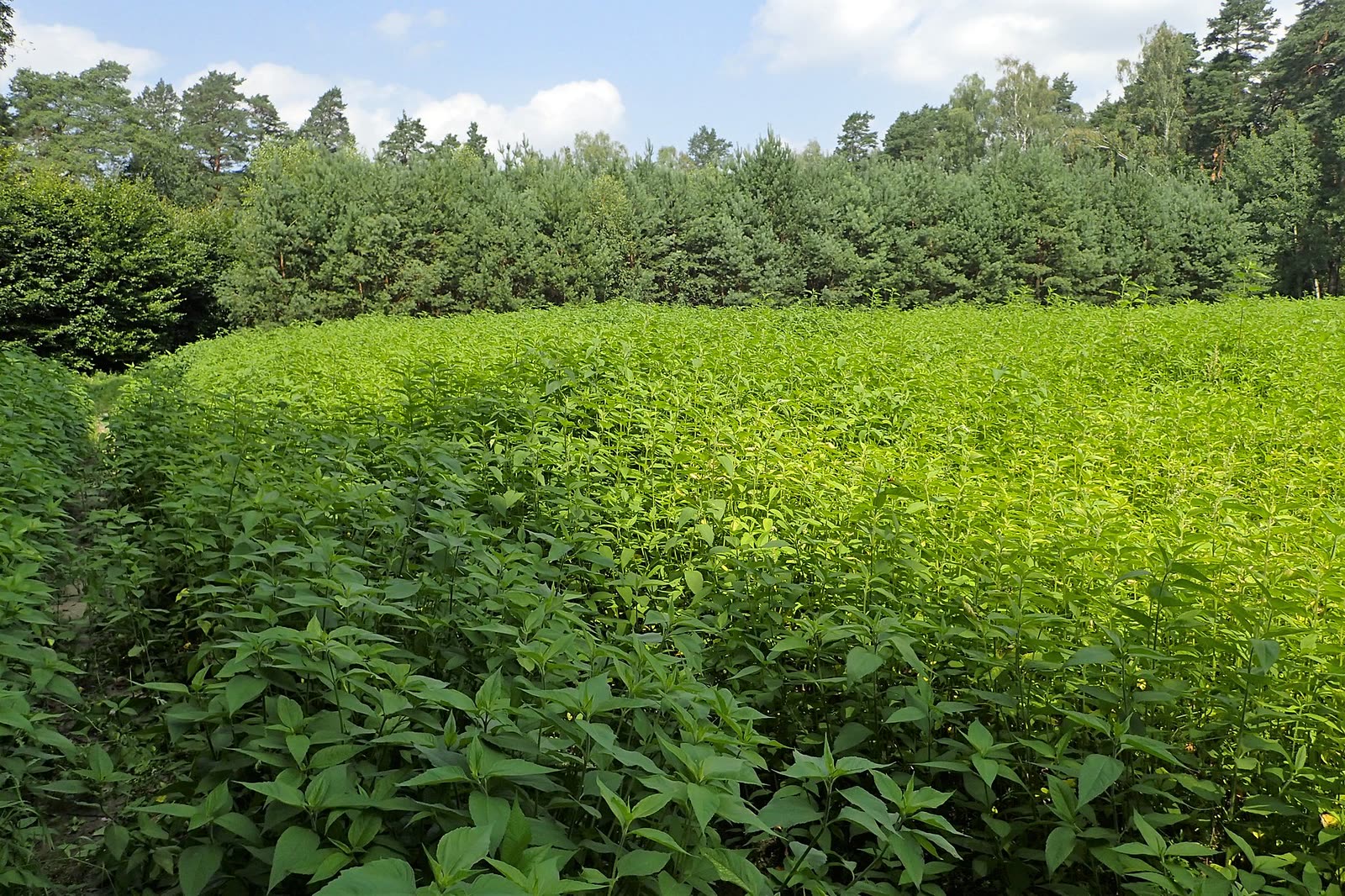
Food Plots
Openings cut, mulched and prepped where the deer already travel — sized, shaped and oriented for the stand you are actually going to sit in.
A food plot is not just a hole in the woods. Where you put it, how big it is, which way it runs and how a deer enters it decide whether it holds animals in daylight or only after dark.
We cut plots with that in mind: shaped so the prevailing wind works for the stand, edged so deer have cover right up to the opening, and sized to what the sunlight and your seed budget can actually carry.
What that includes
- Site selection. Working with existing trails, bedding and terrain instead of against them.
- Cutting and mulching. Opening ground and grinding the material into a seedbed-friendly layer.
- Shape and orientation. Laid out for wind direction, entry routes and shooting angles.
- Edge feathering. Soft transitions so deer step out instead of hanging up in the timber.
- Access lanes. A quiet way in and out that does not blow the plot every time you hunt it.
 Food Plots
Typically called for
- Whitetail management
- Green fields and clover plots
- Turkey strut zones
- Bow-range openings
- Interior timber plots
- Kill plots off bedding
Service 05
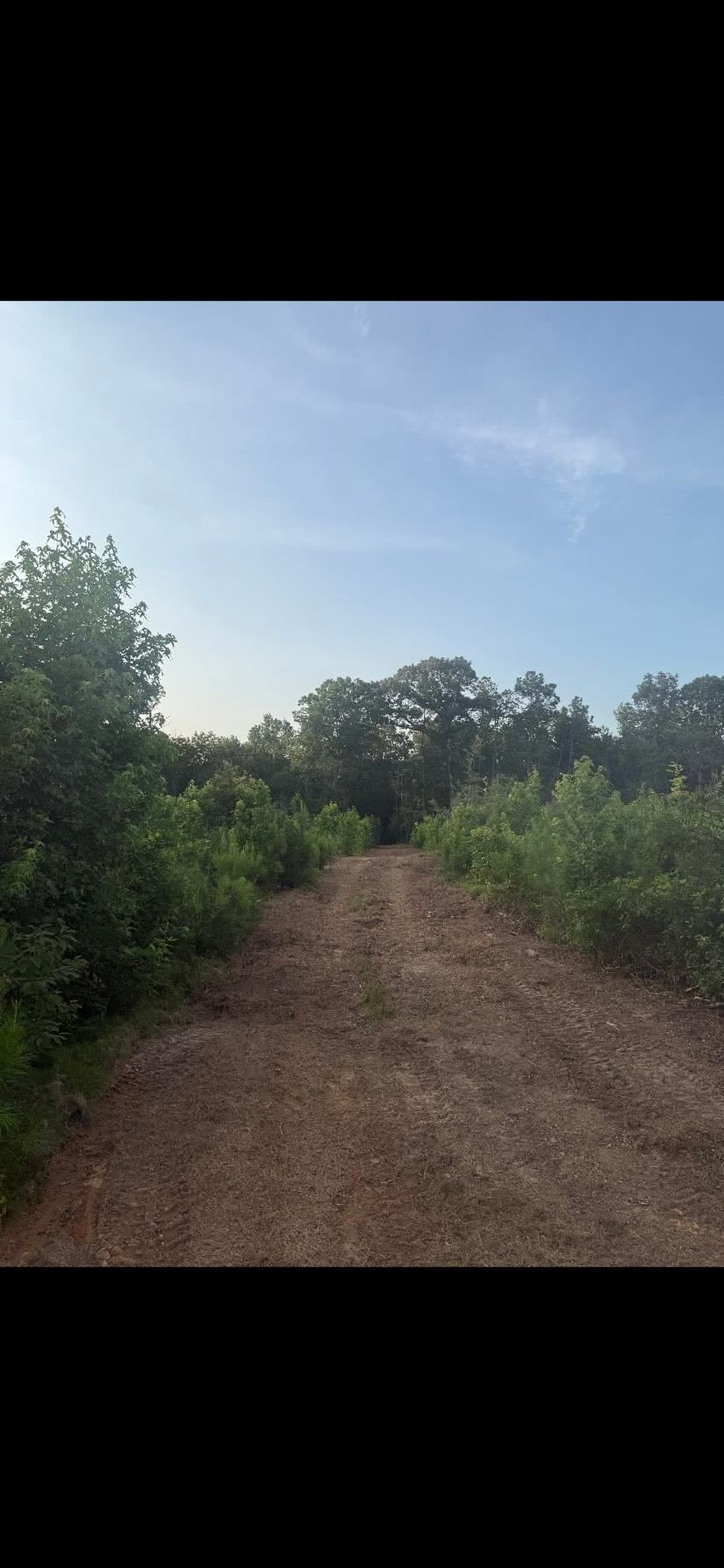
Shooting Lanes
Clean sight lines cut to your stand, your yardage and your prevailing wind — not a generic straight line hacked through the timber.
Most lanes get cut wrong: too wide, too straight, and pointed wherever was easiest to drive. That gives deer a wide-open corridor they will not cross in daylight and gives you a shot you did not want.
We cut from the stand outward. You sit where you actually sit, we cut what you actually need to see, and we stop there — narrow enough that deer stay comfortable, open enough that you get a clean, ethical shot at known yardage.
What that includes
- Cut from the seat. We lay lanes out from your stand, not from the road.
- Ranged and marked. Lanes cut to known distances so you are not guessing at daylight.
- Wind-aware layout. Oriented so your scent is not walking down the lane ahead of you.
- Narrow by design. Wide enough for the shot, tight enough that deer still use it.
- Quiet access trails. A route in that does not push everything off the property.
 Shooting Lanes
Typically called for
- Box blinds and ladder stands
- Bow and crossbow setups
- Rifle lanes to known yardage
- Green field edges
- Creek and drain crossings
- Property-line setups
Same machine, same trip
Other things we get asked for.
These are not separate services so much as the same equipment pointed at a different problem. If it is on this list, it is almost always cheaper bundled into a job you are already booking.
- Trail cutting
- Firebreaks
- Fence line clearing
- Survey line clearing
- Pond bank clearing
- Creek and drain access
- Storm debris cleanup
- Logging road reopening
- Camp and cabin yards
- Right-of-way maintenance
Pricing
Why nobody quotes this over the phone.
Any contractor who gives you a per-acre price sight unseen is either padding it heavily or planning to come back with a change order. Here is what actually moves the number.
Get a real numberStem density
Scattered saplings under mature pines cut fast. A solid wall of privet and sweetgum is a completely different day of work on the same acre.
Average stem size
Two-inch brush feeds straight through. Eight-inch stems mean slowing down, working the head and burning more fuel per foot.
Terrain and access
Flat and dry moves. Steep, wet, cut up with drains, or a half-mile from anywhere the trailer can park all add real time.
How much actually needs cutting
Ten acres on the deed is rarely ten acres of work. We price the part that needs the machine, not the part that is already open.
How clean you want it
A rough knock-down for access and a manicured park-like finish are different passes. You pick which one you are paying for.
Which service do I actually need?
If it is woody — brush, saplings, privet, small trees — that is forestry mulching. If it is grass and weeds, that is bush hogging and it costs less. If you are opening ground for a building, a pasture or a fence, that is land clearing.
Not sure? Send a photo. We will tell you which one fits, even when it is the cheaper one.
Can you do more than one service on the same visit?
Yes, and it usually saves money. Moving equipment is a real cost, so combining a mulching job with lanes, a plot or a bush hog pass on one trip beats booking them separately.
Do you work year round?
Yes. Winter and early spring are actually ideal for mulching — sightlines are open, ground is firm, and you are not fighting heat or snakes. Late summer books up fastest because everyone wants lanes and plots ready before season.
How is a job priced?
By what is standing there and how long it takes to cut. Stem density, average stem size, terrain, slope and access all move the number — which is why every estimate is done on the property, not over the phone.
Do you clear stumps?
Mulching grinds stems at or near grade, so you are not left with the stump field a dozer leaves behind. Full below-grade stump removal is a different job — tell us what the ground has to support and we will be straight about whether mulching gets you there.
Free estimates · No obligation
Not sure which one
you need?
Send a photo and a rough acreage. We will tell you which service fits — including when the cheaper one is the right call.